Septic Services and Septic Tank Cleaning: What’s the Difference?


Homeowners often use the terms interchangeably, and that is understandable. When a septic system starts acting up, most people think in one category: get someone out here before the bathrooms stop working. But in the field, there is a real difference between septic tank cleaning and the broader category of septic services. Knowing that difference can save money, prevent repeat problems, and help you hire the right company for the job.
A septic system is not just a buried tank that needs to be emptied now and then. It is a working wastewater treatment system with several parts that have to cooperate under constantly changing conditions. Water enters from the house, solids settle, fats float, bacteria break down organic matter, effluent flows out, and the drain field finishes the treatment process in the soil. If one part slips out of balance, the symptoms may show up somewhere else entirely. That is why pumping the tank is sometimes the right answer, and sometimes only part of it.
The distinction matters most when a homeowner calls for “cleaning” but the real issue is a blocked outlet baffle, a failed pump, a saturated drain field, a crushed line, or years of improper usage that have turned a routine maintenance visit into a repair call. A good provider will sort those possibilities out instead of treating every problem as a simple pump-out.
Septic tank cleaning is one specific job
Septic tank cleaning usually refers to removing the contents of the septic tank. Some companies call it pumping. Others use cleaning to suggest a more thorough removal of sludge, scum, and liquid than a quick pump-out. The wording varies by region and by contractor, but the core task is fairly straightforward: a vacuum truck removes accumulated waste from the tank so solids do not rise high enough to wash into the outlet and on toward the drain field.
That job is essential maintenance. Every septic tank fills with solids over time, even in a careful household. Toilet paper, food particles, grease, soap residue, lint, and the non-digestible material that enters through normal use all build up. Bacteria do part of the work, but not all of it. Nothing about a healthy septic tank means it never needs attention.
In a normal service call for tank cleaning, the crew locates the access lids, opens the tank, measures the sludge and scum levels, vacuums out the contents, and often performs a basic visual check of the tank’s interior condition. They may note whether the baffles are intact, whether roots are entering around risers, whether water is backing up from the outlet side, and whether the liquid level looks normal. Some companies rinse portions of the tank to remove stubborn buildup, though practices differ.
That is the key point: cleaning addresses the tank itself. It does not automatically diagnose every septic issue on the property, and it does not repair a system that has a larger failure.
Septic services is the bigger umbrella
Septic services covers the entire range of work related to a septic system. Cleaning is part of it, but not the whole picture. Think of it the way you would think about vehicle care. An oil change is maintenance. Auto service includes diagnostics, repairs, inspections, electrical issues, and replacement parts. Septic work follows a similar logic.
A septic company offering full septic services may handle routine pumping, system inspections, line jetting, baffle replacement, filter cleaning, riser installation, pump chamber service, alarm troubleshooting, distribution box repairs, drain field evaluation, and emergency response for backups or overflows. Some also install new systems, though not all service companies do installation work.
This broader category matters because many calls that begin as “my tank probably needs cleaning” turn out to involve something else. A family may have had the tank pumped six months ago and still be dealing with gurgling drains. In that case, the tank is unlikely to be the whole story. A technician may find a clogged effluent filter, a stuck pump float in an aerobic or pressure-dosed system, a sagging sewer line from the house, or hydraulic overload from leaking fixtures and heavy laundry usage.
That is where professional judgment separates a basic pump-out vendor from a strong septic services provider. One removes waste. The other evaluates how the whole system is performing and whether the symptom matches the requested task.
Why homeowners blur the line
Part of the confusion comes from marketing. Some companies advertise septic cleaning, others septic pumping, others septic services, and many use all three terms on the same website. Another reason is that homeowners usually do not see the system. Unlike a furnace or a water heater, a septic tank spends its life buried and out of mind until there is an odor, a wet patch in the yard, or sewage where it should never be.
There is also a practical reason. A lot of minor problems do improve after pumping. If the tank is overdue and solids are high, removing that load can restore normal flow and reduce odors. From the homeowner’s perspective, the cleaning “fixed” the problem. Sometimes that is true. Sometimes the service simply bought time before the deeper issue showed itself again.
I have seen properties where the owner believed the system was failing because toilets were slow and the yard smelled musty after rain. The actual problem was not a full tank but runoff from a gutter discharging over the drain field, saturating the soil. Pumping the tank helped for a few weeks because it reduced the water level and storage pressure, but the field kept getting drenched from above. That was a drainage problem, not a cleaning problem.
What cleaning can do, and what it cannot
A proper septic tank cleaning can prevent expensive damage. That is not an overstatement. When solids leave the tank and enter the drain field, they can clog the soil interface that wastewater needs for final treatment. Once a drain field is badly compromised, the cost difference between routine maintenance and replacement becomes painful. In many areas, a normal residential pump-out might cost a few hundred dollars, depending on tank size, access, and disposal fees. Replacing a failing drain field can run into the thousands or much more, especially on difficult sites.
Still, it helps to be realistic about what cleaning can accomplish. It can remove accumulated waste from the tank. It can restore storage capacity. It can often reveal visible defects inside the tank. It may reduce odors and backups caused by overfilled conditions. But it cannot repair cracked tank walls, revive a biologically or hydraulically overloaded drain field, correct bad plumbing habits, or overcome improper installation.
That is why a company that only sells tank cleaning may not be enough if your symptoms point to something beyond accumulation.
Common situations where full septic services are the better fit
When a system shows signs of trouble, context matters more than the label on the truck. If the problem is maintenance overdue by several years, cleaning may solve it. If the tank was recently pumped and trouble returned almost immediately, broader diagnostics are a safer bet.
The following situations usually call for more than a basic cleaning appointment:
- Sewage backs up into the house shortly after the tank was pumped
- There is standing water or persistent sogginess above the drain field
- Septic alarms are sounding on systems with pumps or aerobic components
- Drains are slow only in one part of the house, suggesting a line issue
- Strong odors remain after pumping, especially near the tank outlet or field
Each of those symptoms can still involve the tank, but they also point to other likely causes. A backup after recent pumping often suggests a blockage or field problem. Surface water over the field raises concern about drainage capacity. Alarms indicate a mechanical issue, high water level, or electrical fault. A localized slow drain may have nothing to do with the septic tank at all. Persistent odor can come from damaged seals, venting issues, or leaking effluent.
This is where a thorough service call pays off. A technician may inspect inlet and outlet baffles, check for an effluent filter, assess liquid levels relative to the outlet, verify whether the pump chamber is cycling properly, and trace whether the problem starts in the building sewer, the tank, or the disposal area.
The anatomy of a broader service visit
Homeowners often ask what they are really paying for when they schedule septic services instead of just pumping. The answer is time, equipment, and trained observation. Good diagnostics are not glamorous, but they are what keep a manageable problem from becoming an expensive mystery.
A more comprehensive visit may include:
- Locating and uncovering tank lids and related access points
- Measuring sludge and scum depth, then comparing that to normal ranges
- Inspecting baffles, filters, pumps, floats, alarms, and visible tank condition
- Checking flow direction and liquid levels to spot blockages or field stress
- Recommending maintenance, repair, or further testing based on findings
That kind of visit usually takes longer than a quick pump-and-go appointment, especially on older properties where records are thin and the components are not easy to access. It is also more useful if your system has a history of recurring trouble.
On one older rural property, for example, the owners had pumped the tank regularly but still dealt with surfacing water every spring. Cleaning was not the issue. The actual problem was that the distribution box had settled and was no longer sending effluent evenly into the field lines. One trench was overloaded while the others were barely taking flow. A contractor focused only on pumping would have missed that pattern. A broader service inspection caught it.
Frequency is not one-size-fits-all
People love a fixed rule for septic maintenance, but there is no universal calendar that fits every home. A common rule of thumb for septic tank cleaning is every three to five years for many households, but that range can shift significantly based on tank size, number of occupants, garbage disposal use, laundry habits, water softener discharge, and whether the house is a full-time residence or a weekend property.
A two-person household with a large tank and conservative water use may stretch comfortably toward the longer end of the range. A family of five with frequent guests, heavy laundry volume, and a kitchen sink that sees plenty of grease can need service much sooner. Vacation rentals deserve special caution because occupancy swings make it harder to predict loading, and guests tend to treat plumbing carelessly.
This is another place where septic services and septic tank cleaning diverge. Cleaning is scheduled maintenance. Service planning is management. A good provider may recommend inspection intervals, usage adjustments, filter maintenance, and water conservation measures tailored to your actual system. That advice is often worth more than the pumping itself.
Cleaning terminology can hide important differences
Not every “cleaning” job is performed the same way. Some companies simply evacuate the liquid and a portion of the solids. Others make a point of fully agitating and removing sludge from corners and partitions. Some inspect the baffles carefully. Others are in and out in minimal time. That does not automatically make the faster service bad, but it does mean the homeowner should ask what is included.
For example, if your tank has an effluent filter, it should be checked and cleaned as part of normal maintenance. A clogged filter can mimic more serious problems by slowing flow from the tank to the next stage. If nobody checks it, the homeowner may assume the system is failing when the issue is far more manageable.
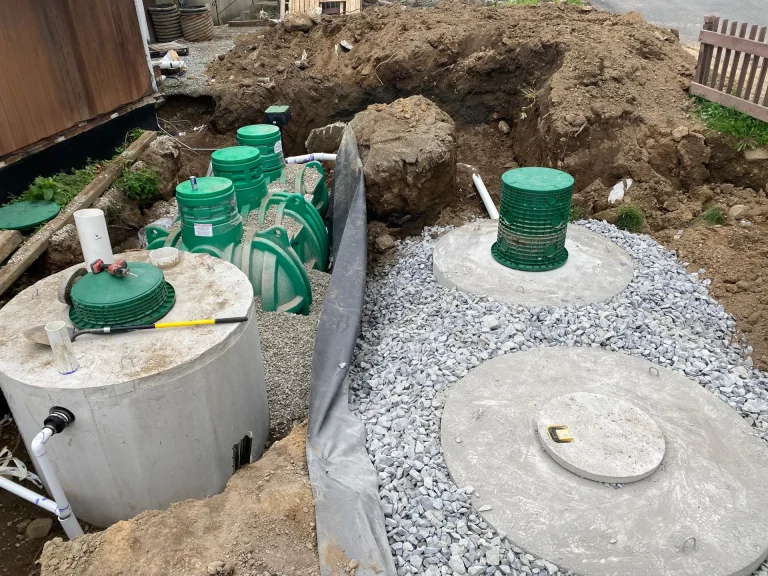
Likewise, access matters. Tanks without risers are harder to service because the lids are buried. Some companies charge extra to dig. Some offer riser installation so future maintenance becomes easier and more consistent. That is a classic example of septic services extending beyond cleaning. The tank still gets pumped, but the provider is also improving long-term access and maintenance reliability.
Red flags when someone recommends pumping as the answer to everything
A lot of septic problems do start with overdue maintenance, so pumping is often a fair first step. But homeowners should be cautious when every symptom receives the same answer without questions.
If a company does not ask when the tank was last serviced, how many people live in the home, whether alarms are present, whether the backup affects the whole house or one fixture, or whether wet areas exist near the field, they may be treating your system as a single-component problem. Septic systems rarely reward that kind of oversimplification.
Another red flag is a promise that additives will replace pumping. Some products are marketed as a shortcut to maintenance, but they are not a substitute for removing accumulated solids. At best, many are unnecessary. At worst, they can stir solids into suspension and move them toward the field. Routine cleaning and informed septic services remain the practical standard.
How to choose the right call for your situation
If your household has no active symptoms and you are simply due based on time and usage, scheduling septic tank cleaning is usually the right move. Make sure the provider actually inspects the tank condition while servicing it, and keep a record of the date, estimated volumes removed, and any comments about baffles, filters, or abnormal water levels.
If you have recurring slow drains, odors, alarms, wet spots, backups, or a recent pump-out that did not solve the problem, request septic services rather than only cleaning. Describe the symptoms in detail. Good information from the homeowner often shortens diagnosis. Mention recent heavy rain, recent houseguests, remodeling work, or changes in water use. Those details matter more than people expect.
Also ask whether the company works on your specific type of system. A conventional gravity system, an aerobic treatment unit, and a pressure-dosed setup do not require the exact same expertise. Many strong contractors handle all three, but it is worth confirming.
Preventive care is where the real savings happen
Most catastrophic septic bills begin as small ignored warnings. A toilet that bubbles occasionally, an alarm that gets silenced instead of investigated, a tank lid buried so deeply that maintenance keeps getting postponed, a leaky toilet that runs month after month, these are ordinary oversights that can age a system faster than most owners realize.
The smartest approach combines regular tank cleaning with broader septic services when conditions call for them. Maintenance keeps solids where they belong. Inspections catch defects before they spread. Repairs made early are usually simpler than repairs made after wastewater reaches the yard or the house.
There is also a quality-of-life angle. People tend to think of septic care as a cost center, but a well-maintained system is largely invisible. Fixtures drain properly. The yard stays dry. There are no emergency calls before a holiday weekend. There is no panic during a home sale when an inspection turns up years of deferred maintenance. Quiet performance is the real payoff.
The plain-language difference
If you want the clearest possible distinction, it is this: septic tank cleaning is one maintenance task, while septic services is the full category of care, inspection, troubleshooting, and repair for the entire septic system.
That may sound like a technical distinction, but it plays out in very practical ways. When the system is healthy and it is simply time to remove accumulated solids, cleaning is enough. When there https://sethzykm943.inkharbory.com/posts/why-regular-septic-services-save-you-money are symptoms, history, or uncertainty, broader septic services are the better fit because they address causes, not just contents.
For homeowners, the goal is not to memorize every component underground. It is to know when you are booking routine maintenance and when you need someone to think like a system diagnostician. That difference often determines whether the next visit is a simple scheduled appointment or the first step toward solving a problem that pumping alone never would have fixed.
Excavating New Jersey LLC
Address: 406 County Rd 565, Wantage, NJ 07461
Phone number: +19737914284
FAQ About Septic Services
What is the average cost to get a septic tank emptied?
Emptying a septic tank costs between $290 and $560 on average, with most homeowners paying about $420. Prices vary based on tank size.
What is septic service?
Septic service inspects, pumps, cleans, and maintains a septic tank. A septic tank is a large, underground container that collects and treats wastewater from your home. Over time, sludge, scum, and other debris, like hair and solids, can build up in your tank and clog your drain field.
How often should you have a septic tank serviced?
A standard septic tank should be inspected every 1 to 3 years and pumped every 3 to 5 years. However, the exact schedule depends on your tank's capacity, household size, and daily water usage.